
.png)


Premium Quality · Steam Distilled
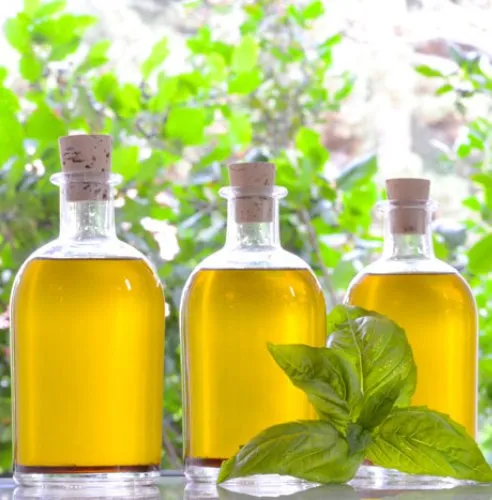
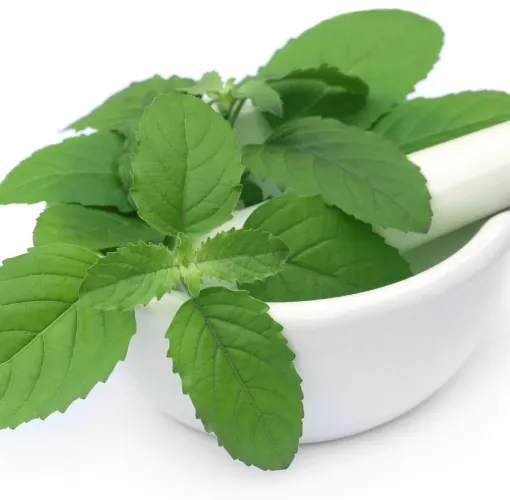
Holy Basil Essential Oil is steam distilled from the leaves of Ocimum basilicum ct. Estragole, a highly revered aromatic herb known throughout India as Tulsi. Celebrated for thousands of years in Ayurvedic traditions, Holy Basil is valued for its uplifting aroma, spiritual significance, and wide range of traditional wellness applications.
At Kush Aroma Exports, a trusted essential oil manufacturer, we provide premium-quality Holy Basil Essential Oil carefully distilled from fresh leaves harvested during peak growing season. Each batch is produced under strict quality standards to preserve its naturally occurring aromatic compounds and characteristic sweet-spicy fragrance.
Botanical Name: Ocimum basilicum, ct. Estragole
INCI Name: Ocimum sanctum Leaf Extract
Origin: India
Crop Season: November – February
Plant Part Used: Leaves
Method of Extraction: Steam Distillation
Appearance: Colourless to pale yellow liquid
Holy Basil Essential Oil offers a sweet, spicy, fresh herbal aroma with subtle balsamic and woody undertones. Its lasting sweetness and vibrant herbal character make it a strong top note in aromatherapy and natural fragrance formulations.
Bergamot, Clary Sage, Clove Bud, Lime, Eucalyptus, Juniper, Neroli, and Rosemary essential oils.
Holy Basil, commonly known as Tulsi, is native to Southern India and Southeast Asia and holds a sacred place in Indian culture. The plant has been used extensively in Ayurvedic medicine and spiritual practices for centuries. Traditionally, Tulsi has been associated with supporting wellness in cases of colds, headaches, digestive discomfort, inflammation, heart-related concerns, and seasonal ailments.
Beyond its traditional medicinal significance, Holy Basil is widely appreciated as a culinary herb. It is frequently used in Thai cuisine, where it is often referred to as Thai Holy Basil or "Kaphrao." The herb contributes a distinctive flavor profile to numerous Southeast Asian dishes.
In aromatherapy, Holy Basil Essential Oil is valued for its refreshing and cleansing properties. It is commonly used in diffuser blends to freshen indoor environments and is believed to support respiratory, nervous, and digestive wellness while promoting mental clarity and focus.
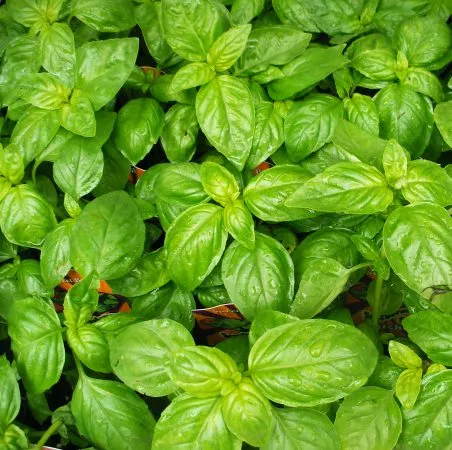
Basil is believed to be native to India and has been cultivated for over 5,000 years. Ancient Greek scholars, including Theophrastus and Dioscorides, documented its uses and characteristics. Over time, basil spread throughout Asia, Europe, and beyond, becoming an important culinary and medicinal herb.
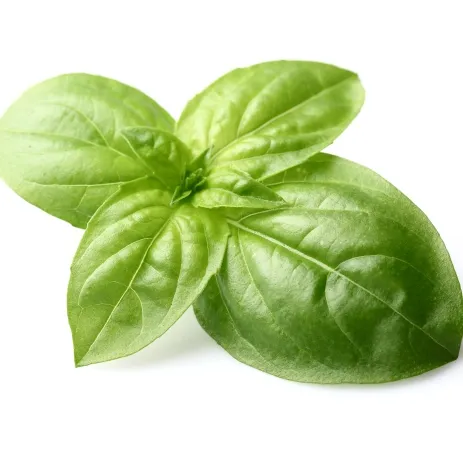
Today, basil remains one of the most widely recognized herbs worldwide, playing a central role in Italian cuisine as well as the traditional cuisines of Thailand, Indonesia, Malaysia, Vietnam, Cambodia, Laos, and Taiwan. Depending on the variety, basil may exhibit sweet, spicy, anise-like, or herbal flavor notes.
Holy Basil thrives in warm, sunny climates and grows best in well-drained soil with abundant sunlight. The leaves are harvested during the peak growing season and immediately processed to preserve their aromatic quality.
Steam distillation is used to extract the essential oil from freshly harvested leaves. This process captures the plant's characteristic aromatic compounds, resulting in a fragrant oil rich in naturally occurring estragole and other beneficial constituents.
Due to the presence of naturally occurring estragole and related compounds, Holy Basil Essential Oil should be used with care. Dilute before use and avoid contact with eyes and mucous membranes. For external use only. A patch test is recommended prior to topical application. Consult a qualified healthcare professional before use, particularly during pregnancy or if you have existing health concerns.
Kush Aroma Exports is a Government-recognized Star Export House and a leading manufacturer, supplier, exporter, wholesaler, and essential oil manufacturer based in Kannauj, India. We supply premium-quality Holy Basil Essential Oil in both retail and bulk quantities, backed by rigorous quality control, authenticity testing, and worldwide shipping.
100% Pure & Natural
Lab Tested Quality
Bulk & Retail Orders
Worldwide Shipping
| Constituent | Percentage |
|---|---|
| Estragole | 73.4–87.4% |
| Linalool | tr–8.6% |
| 1,8-Cineole | 0.6–6.0% |
| β-Caryophyllene | tr–4.0% |
| (+)-Limonene | 0.1–3.0% |
| Methyleugenol | 0–4.2% |
| (E)-β-Ocimene | 0–2.2% |
| Terpinen-4-ol | 0–2.2% |
| 10-epi-α-Cadinol | 0–1.3% |
| Eugenol | tr–1.2% |
| Bornyl Acetate | 0–1.1% |
| Camphor | tr–1.0% |
| Quality Note | May be adulterated with added estragole. |
| Hazards | Potentially carcinogenic based on estragole and methyleugenol content; may inhibit blood clotting. |
| Contraindications | Should not be taken in oral doses. |
| EU Maximum Dermal Use Level | 0.005% |
| IFRA Maximum Dermal Use Level | 0.005% |
| Tisserand & Young Maximum Dermal Use Level | 0.1% |
| Recommended Dermal Maximum | 0.1% based on 87.4% estragole and 4.2% methyleugenol content. |
| Commission E | Due to high estragole content, basil oil preparations should not be used during pregnancy, nursing, by infants, small children, or for extended periods. |
| IFRA (Estragole) | Maximum dermal use level of 0.01% in leave-on and wash-off body and face products. |
| IFRA (Methyleugenol) | Maximum concentration of 0.0004% in leave-on products. |
| SCCNFP | Maximum methyleugenol concentration of 0.0002%. |
| Adverse Skin Reactions | Mild irritation observed in mice; 4% dilution was neither irritating nor sensitizing in human volunteers. Non-phototoxic. |
| Cardiovascular Effects | Estragole inhibits platelet aggregation, an important step in blood clotting. |
| Acute Toxicity | Oral LD50 in rats: 1.4 mL/kg; Dermal LD50 in rabbits: >5 mL/kg. |
| Carcinogenic / Anticarcinogenic Potential | Estragole and methyleugenol are rodent carcinogens when oral exposure is sufficiently high. Moderate chemopreventive activity has also been reported in laboratory studies. |
| Genotoxicity | Research indicates that the other constituents present in basil oil do not significantly alter the genotoxic potential of estragole. |