
Do Essential Oils Expire? Shelf Life, Storage and Signs of Oxidation
Yes, they do. Here is how long each family lasts, and how to make them last longer.
Ask ten people do essential oils expire and you will get ten different answers. Some say never. Some throw everything out after a year.
So, do essential oils expire? Yes. They do not rot like food, but they oxidise. The chemistry changes, the aroma changes, and an old oil can irritate skin that a fresh one never would.
This guide gives you the real shelf life of each oil family, the signs that a bottle has turned, and the storage habits that can double how long your oils last. It also covers bulk storage for anyone buying by the drum.
Do Essential Oils Expire? The Short Answer
So do essential oils expire? Not the way milk spoils. There is no bacteria to worry about. Instead, they oxidise. Oxygen, light and heat slowly break the molecules apart and build new ones.
The result is an oil that smells flat or sour, works less well, and carries a higher risk of skin reactions. In fact, oxidised oils are a leading cause of sensitisation, the lasting allergic reaction we cover in our essential oil safety guide.
One point that surprises most people: shelf life starts at distillation, not at purchase. An oil that sat in a warm warehouse for a year before you bought it has already used part of its life.
Essential Oil Shelf Life by Chemical Family
When people ask do essential oils expire, the best rule of thumb comes from Robert Tisserand, author of Essential Oil Safety. He groups oils by their main chemistry, because that decides how fast they oxidise. His guidance assumes cold storage. If you keep oils at room temperature, halve these figures.
| Shelf life (refrigerated) | Oil family | Examples | Why |
|---|---|---|---|
| 1 to 2 years | Monoterpene-rich | Lemon, orange, grapefruit, bergamot, neroli, lemongrass, frankincense, tea tree, pine, spruce | Limonene and other monoterpenes react fast with oxygen |
| 2 to 3 years | Most other oils | Lavender, peppermint, eucalyptus, rosemary, geranium, clary sage, ylang ylang | Alcohols, esters and oxides are more stable |
| 4 to 8 years | Sesquiterpene-rich | Patchouli, sandalwood, vetiver, cedarwood | Heavy molecules resist oxidation, and aroma may improve |
For a single-oil example, see our patchouli essential oil guide. Citrus oils, though, are the ones to watch. They are cold pressed and dominated by limonene, so they turn first and most noticeably. Buy them in small bottles, use them first, and refrigerate them once opened. Our post on lemon essential oil uses covers that oil in detail.
At the other end, patchouli genuinely improves for the first couple of years. Our patchouli essential oil guide explains why. Source: the AromaWeb shelf-life guide, which summarises Tisserand’s guidance.
What About Carrier Oils and Blends?
Carrier oils are a different story. They are fatty oils, and they go rancid through a different process. Most last 6 to 24 months. Fractionated coconut and jojoba are the long keepers. Grapeseed, sweet almond and rosehip are the short ones.
Here is the catch. Once you dilute an essential oil, the blend takes on the carrier’s shorter shelf life. A patchouli that lasts years will last months in grapeseed. So make small batches and date them. Our essential oil dilution guide covers carrier choice.
Signs an Essential Oil Has Oxidised: When Essential Oils Expire
You do not need a lab to answer do essential oils expire for a given bottle. Your senses will usually tell you, if you know what to check.
- The smell has changed. It is flatter, sharper, sour, or simply less complex than it was. Citrus loses its bright top note first.
- The colour has darkened. Many oils yellow or brown as they age. Compare against a fresh bottle if you have one.
- It looks cloudy or hazy. Clear oils should stay clear.
- The texture is thicker or sticky. Oxidation builds heavier molecules, so the oil moves more slowly.
- Your skin reacts. A blend that never bothered you now itches or reddens.
So do essential oils expire all at once? No. One oxidised sign is not always fatal. Two or three together mean the bottle is past its best. Use it for cleaning, or let it go.
How to Store Essential Oils at Home So They Do Not Expire Early
Three things decide how fast essential oils expire: oxygen, light and heat. Every storage rule below fights one of them.
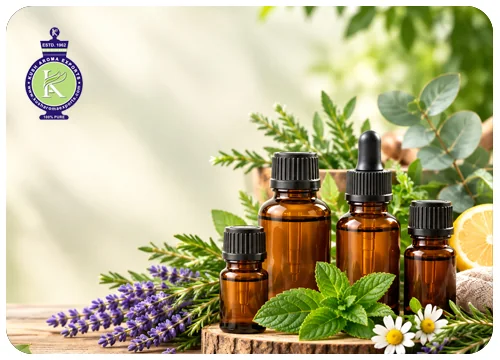
- Dark glass, always. Amber or cobalt bottles block the UV light that drives oxidation. Clear glass and plastic both fail here.
- Cap it tight, straight away. Every minute the cap is off, air gets in. Do not leave bottles open while you blend.
- Keep it cool. A cupboard away from the cooker, a window or a radiator. Not a sunny shelf, and not a steamy bathroom.
- Refrigerate citrus oils once opened. It can double their life. Let the bottle warm up before use so no water condenses inside.
- Decant into smaller bottles as you use an oil. Less air space in the bottle means less oxygen touching the oil.
- Label with the date opened. Your memory will not track twenty bottles.
- Use citrus first. Rotate your collection so the fast-turning oils go before the slow ones.
A refrigerator dedicated to oils is ideal, but a normal fridge works too. Keep the oils in a sealed box so the smell does not reach your food, and let bottles reach room temperature before opening.
Storing Essential Oils in a Hot Climate: The India Factor
How fast do essential oils expire in a hot country? Most storage guides are written for cool European or American homes. That advice falls short in India, and in any hot, humid country. Here is what changes.
- Heat roughly doubles the speed of oxidation for every 10 °C rise. A bottle at 40 °C in a Delhi summer ages about four times faster than one at 20 °C. So the standard shelf-life figures should be halved, or worse, for room-temperature storage in the plains.
- Monsoon humidity creeps into loosely capped bottles. Water in an essential oil turns it cloudy, and it can encourage microbial growth in blends and floral waters. Cap tightly, and keep silica gel sachets in your oil box during the monsoon.
- Sunlight through a window is worse than you think. A bottle on a sunny sill in May can reach 50 °C. Always store in a closed cupboard.
- A fridge is not a luxury here. For citrus oils, floral waters and carrier oils, refrigeration is the difference between one season and three.
At our own facility in Kannauj, where summers regularly pass 40 °C, we hold finished oils in temperature-controlled storage for exactly these reasons. Our page on how we distil essential oils explains the process from still to store.
Bulk Storage for Wholesalers and Manufacturers
If you buy by the kilo or the drum, the question of do essential oils expire has a bigger price tag. The same chemistry applies, but the stakes are higher. A turned drum is a costly loss, and a turned ingredient in a finished product means returns and complaints.
- Store drums cool. A cold room at 2 to 8 °C is the professional standard for citrus and other monoterpene-rich oils.
- Blanket with nitrogen. Displacing the air above the oil with inert gas stops oxidation almost entirely. Many serious suppliers do this before sealing.
- Keep drums full. Half-empty drums have a large air space. Decant into smaller sealed containers as you draw stock down.
- Rotate first in, first out. Track every batch by distillation date, not purchase date.
- Order citrus small and often. Buy long keepers such as cedarwood and patchouli in bulk where it makes sense, and short keepers in the quantities you will use within a year.
- Note the shelf life on your labels. A simple “use within” line protects your customers and your reputation.
One more point for anyone making candles or soap. An oxidised oil throws scent poorly and can smell off in the finished product. Our post on best essential oils for candle making covers scent stability.
What Oxidation Does to Quality
Do essential oils expire in a way that costs you money? Yes. Beyond the smell, oxidation quietly removes the very thing you paid for. Take lemon. Its value rests on a high limonene content, often around 70 percent. As the oil oxidises, that limonene converts into other compounds. A tired lemon oil may hold half the limonene it started with.
That is why a batch-specific Certificate of Analysis matters. It tells you what the oil contained when it was tested. A fresh GC/MS report against an old one shows exactly how much has changed. Our guide on how to tell if an essential oil is therapeutic grade explains how to read those documents.
Do Essential Oils Expire? FAQs
Do essential oils go bad?
Yes, though not the way food does. They oxidise when exposed to oxygen, light and heat. The aroma changes, the oil works less well, and it becomes more likely to irritate skin. Most oils last one to three years at room temperature, and longer when refrigerated.
How long do essential oils last?
It depends on the chemistry. Citrus and other monoterpene-rich oils last about 1 to 2 years refrigerated. Most oils, such as lavender and peppermint, last 2 to 3 years. Sesquiterpene-rich oils such as patchouli, sandalwood and vetiver last 4 to 8 years. Halve these figures for room-temperature storage.
Can I use expired essential oils?
For diffusing or cleaning, often yes, if the smell is still pleasant. For skin, no. Oxidised oils carry a higher risk of irritation and sensitisation. If it smells flat or sour, looks cloudy, or has thickened, keep it off your skin.
Should essential oils be refrigerated?
Citrus oils benefit most, and refrigeration can double their life. Other oils are fine in a cool, dark cupboard, though a fridge does no harm. Let a chilled bottle warm to room temperature before opening so moisture does not condense inside.
How can I tell if an essential oil has oxidised?
Check for a flat, sour or sharper smell, a darker colour, cloudiness, a thicker or sticky texture, or new skin reactions to a blend you used before. Two or more of these together mean the oil is past its best.
Do essential oils have an expiry date?
Reputable suppliers give a distillation date and a shelf-life guide, rather than a hard expiry date, because storage conditions change the outcome so much. Ask for the distillation date and the batch number, and store the oil well from the day it arrives.
The Bottom Line
So, do essential oils expire? Yes, and knowing how fast is half the battle. Citrus first, most oils next, and the heavy woods and resins last of all.
Dark glass, tight caps, a cool cupboard, and a fridge for citrus will stretch every bottle. For bulk stock, cold rooms, nitrogen and first-in-first-out do the same job at scale.
Above all, buy from a supplier who tells you the distillation date. An oil’s clock starts then, not when you open the box. For more on choosing oils in the first place, see our essential oils and their uses guide.
Know the distillation date before you buy
Every Kush Aroma oil is distilled in-house in Kannauj and supplied with a batch number, distillation date and a batch-specific Certificate of Analysis on request. Ask us about cold-chain and nitrogen-blanketed bulk supply.
About Kush Aroma Exports
Kush Aroma Exports has been distilling essential oils in Kannauj, Uttar Pradesh, India’s historic perfumery capital, since 1962. We steam distil, cold press and CO2-extract at our own ISO-certified facility, so we see these oils from raw plant material through to the finished batch. Our organic range carries independent organic certification.
That hands-on production experience is what informs this guide. Every oil we supply can come with a batch-specific Certificate of Analysis and a GC/MS report (read how GC-MS testing works), and our product pages publish typical constituent profiles with a clear note that batch values vary.
We write about what we can verify. Where the science is uncertain, we say so.
Sources and further reading
- AromaWeb — Essential oil shelf life (summarising Tisserand’s guidance) — aromaweb.com
- Tisserand Institute — essential oil safety resources — tisserandinstitute.org
- NAHA — Essential oil safety information — naha.org