Essential Oil Dilution Guide: Ratios, Charts and Carrier Oil Pairing
The exact drops, by age and use, plus which carrier oil to pick.
Essential oils are strong. A single 10 ml bottle of lavender can represent a whole patch of field. So put that on skin neat, and you are asking for trouble.
That is why essential oil dilution is the most important safety skill in aromatherapy. It is also the one most people guess at. This guide therefore removes the guesswork.
Specifically, you will get a full dilution chart by age and use, the simple drops-per-ml maths, and a plain answer to the question everyone asks: which carrier oil should I use?
Why Essential Oil Dilution Matters
Essential oil dilution means mixing a small amount of essential oil into a larger amount of a fixed oil, called a carrier. For example, a 2 percent blend is 2 parts essential oil to 98 parts carrier.
There are three reasons to do this, and none of them is optional.
- It prevents irritation. Otherwise, neat oil can redden and burn skin within minutes.
- It prevents sensitisation. This is a delayed allergic reaction, where your immune system learns to treat that oil as a threat. After that, even tiny amounts can trigger a rash for life.
- It works better. The carrier spreads the oil evenly and slows evaporation, so the active compounds stay on the skin longer.
As the Tisserand Institute puts it, increasing the concentration always increases the risk, yet it may not increase the benefit. In other words, more is not better.
The Essential Oil Dilution Chart
Here is the chart to pin above your blending bench. It uses the common estimate of 20 drops per 1 ml.
| Dilution | Drops per 10 ml | Drops per 30 ml (1 oz) | Best for |
|---|---|---|---|
| 0.5% | 1 | 3 | Babies over 2, very sensitive skin, elderly |
| 1% | 2 | 6 | Children 6 to 12, pregnancy, face, daily use |
| 2% | 4 | 12 | Adults, body care, massage, roll-ons |
| 3% | 6 | 18 | Short-term use, targeted areas |
| 5% | 10 | 30 | Acute, small areas, 1 to 2 days only |
For most adults, 2 percent is the everyday standard. For the face, sensitive skin, or a first try with a new oil, start at 1 percent or lower.
Dilution by Age Group
Children process oils more slowly than adults, and baby skin absorbs at several times the adult rate. So the age tiers below matter.
| Age | Maximum dilution | Notes |
|---|---|---|
| Under 3 months | None | No oils, even diffused |
| 3 months to 2 years | 0.1 to 0.25% | Only lavender, Roman chamomile; seek guidance |
| 2 to 6 years | 0.25 to 0.5% | No peppermint, eucalyptus or rosemary on skin |
| 6 to 12 years | 0.5 to 1% | No wintergreen, birch, clove, cinnamon, oregano |
| Adults | 2% | Up to 3 to 5% short term on small areas |
| Pregnancy | 1 to 2% | Some oils avoided entirely; consult first |
| Elderly, frail | 1% | Same as children under 12 |
These tiers follow the Tisserand Institute and National Association for Holistic Aromatherapy guidance. For the full list of oils to avoid at each stage, see our essential oil safety guide. If you make products for babies, our post on essential oils for diaper rash shows the cautious end of the scale.
The Drops-Per-ml Maths, Made Simple
You do not need a calculator for essential oil dilution. Instead, one formula handles every bottle size.
Drops of essential oil = carrier ml × dilution % × 20 ÷ 100. For example, a 2% blend in 50 ml is 50 × 2 × 20 ÷ 100 = 20 drops.
Here are the sizes you will use most:
- 5 ml (a teaspoon): 1% is 1 drop, 2% is 2 drops.
- 10 ml roller bottle: 1% is 2 drops, 2% is 4 drops, 3% is 6 drops.
- 30 ml (1 oz): 1% is 6 drops, 2% is 12 drops, 3% is 18 drops.
- 100 ml: 1% is 20 drops, 2% is 40 drops.
One honest caveat. Drop size varies a lot. In fact, Tisserand Institute testing found 1 ml could hold anywhere from 20 to 40 drops, depending on the oil and the dropper. So for anything you sell, weigh your oils on a scale instead of counting drops.
How to Choose a Carrier Oil
The carrier is not just filler for an essential oil dilution. Indeed, it changes how the blend feels, how fast it absorbs, and how long it keeps. So pick it with the same care as the essential oil.
| Carrier oil | Feel | Absorbs | Shelf life | Best for |
|---|---|---|---|---|
| Jojoba | Light, close to skin sebum | Fast | 2+ years | Face, roll-ons, oily skin |
| Fractionated coconut | Very light, stays liquid | Fast | 3+ years | Massage, roller bottles |
| Sweet almond | Medium, silky | Medium | 6 to 12 months | Body oils, dry skin |
| Grapeseed | Light, slightly astringent | Fast | 6 months | Oily skin, massage |
| Rosehip | Light, rich in fatty acids | Fast | 6 months | Ageing skin, scars |
| Argan | Medium, nourishing | Medium | 1 to 2 years | Hair, dry skin |
| Olive | Heavy, greasy | Slow | 1 year | Salves; not ideal for face |
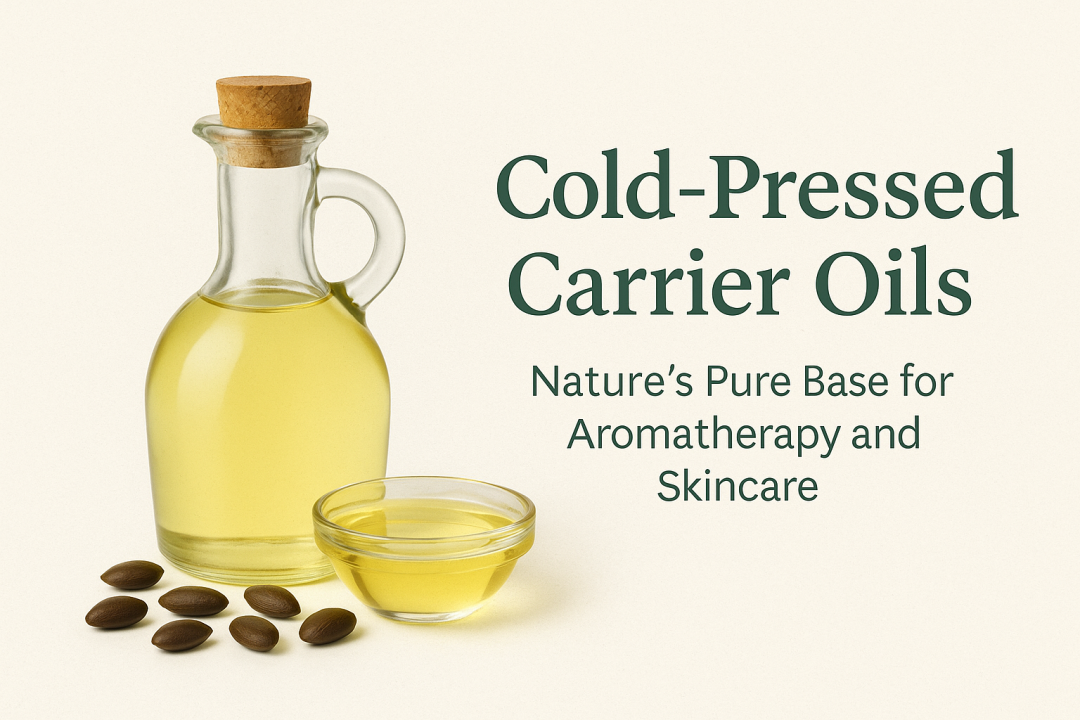
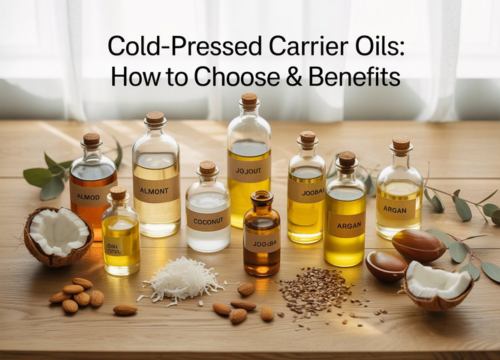
Overall, for most beginners, jojoba for the face and fractionated coconut for the body cover nearly every need. You can compare our cold-pressed carrier oils range for specifications, starting with our organic coconut carrier oil. For deeper reading, also see our posts on best carrier oils for skin and top carrier oils and their benefits, and our explainer on cold-pressed carrier oils explained.
Can You Use Olive Oil as a Carrier Oil?
Yes, you can. Certainly, it is safe, it is cheap, and it is already in most kitchens. However, it is not the best choice for most blends.
Olive oil is heavy and greasy. However, it absorbs slowly, it can clog pores, and its own strong smell fights the essential oil. Above all, ordinary cooking olive oil often sits open for months, so it may already be rancid.
So use it for a salve or a quick one-off. For anything you apply daily, or anything for the face, choose jojoba, sweet almond or fractionated coconut instead.
Carrier Oil Shelf Life Changes Everything
Here is a point most guides miss. Once you dilute an essential oil, the blend takes on the shorter shelf life of the carrier. A patchouli oil that lasts years will last months once it sits in grapeseed.
So make small batches, label them with the date, and store them in dark glass. Our post on do essential oils expire covers storage in detail. One India-specific note: in a 40 °C summer, a carrier can turn rancid in a matter of weeks. So keep blends in the coolest room you have, or in the fridge.
Essential Oil Dilution Step by Step: How to Blend
- Choose a clean, dark glass bottle. Amber or cobalt blocks light.
- First, decide the dilution from the chart above. When in doubt, go lower.
- Pour in the carrier oil first. It is easier to count drops into oil than to pour oil over drops.
- Then add the essential oil drops slowly, and count out loud.
- After that, cap the bottle and roll it between your palms. Do not shake hard, because that adds air.
- Finally, label it with the oils, the percentage, and the date.
- Patch test on the inner forearm and wait a day before using it more widely.
For the different ways to apply the finished blend, see our guide on how to use essential oils.
Patch Testing: The Five-Minute Habit That Prevents Weeks of Trouble
A patch test tells you whether your skin will accept an essential oil dilution before you spread it over a large area.
Apply a small amount of the diluted blend to the inner forearm. Then cover it with a plaster if you like. Then wait 24 hours. If there is no redness, itching or swelling, the blend is likely fine for you.
Also, test every new oil and every new carrier, not just the finished blend. Sensitivity can come from either half.
Essential Oil Dilution FAQs
What is the correct dilution for essential oils?
For most adults, 2 percent is the everyday standard. For example, that is 12 drops in 30 ml of carrier oil, or 4 drops in a 10 ml roller bottle. Use 1 percent or lower for the face, for children aged 6 to 12, during pregnancy, and for the elderly. However, go up to 3 to 5 percent only for short-term use on small areas.
How many drops of essential oil per 10 ml of carrier oil?
Two drops gives 1 percent, four drops gives 2 percent, and six drops gives 3 percent. This uses the common estimate of 20 drops per ml. Drop size varies, so weigh your oils if you make products to sell.
Can you use olive oil as a carrier oil for essential oils?
Yes, it is safe, but it is not ideal. Olive oil is heavy, greasy and slow to absorb, and its own smell competes with the essential oil. Still, it is fine for a salve or a one-off. For daily use, or for the face, choose jojoba, sweet almond or fractionated coconut instead.
Which carrier oil is best for skin?
Jojoba is the best all-rounder for the face, because it closely matches the skin’s own oil and absorbs quickly. Fractionated coconut is ideal for body massage and roller bottles. Similarly, rosehip suits ageing skin, and sweet almond suits dry skin. Match the carrier to the job.
Do essential oil blends expire?
Yes. Once diluted, a blend takes on the shelf life of its carrier oil, which is often 6 to 12 months. Make small batches, label them with the date, and store them in dark glass away from heat and light.
Is a 1 percent dilution enough to work?
For most purposes, yes. Research suggests that going beyond 3 to 5 percent rarely adds benefit, only risk. A 1 percent blend is the safe standard for the face, for children, and for anyone with sensitive skin, and it still delivers the aroma and the active compounds.
The Bottom Line
Essential oil dilution is simple once you know the numbers. Two percent for adults, one percent for the face and for anyone sensitive, and lower again for children. Twenty drops to the millilitre gets you close enough at home.
Pair that with the right carrier oil, a small batch, a label and a patch test. Do that every time, and you will get the benefit of your oils without the risks.
Finally, remember that a dilution chart only protects you if the oil is what the label says. Our guide on how to tell if an essential oil is therapeutic grade shows how to check.
Essential oil dilution starts with a trusted carrier and oil source
Kush Aroma supplies both essential oils and carrier oils, distilled and pressed in Kannauj, with batch-specific documentation on request. Build your first blend with oils you can verify.
About Kush Aroma Exports
Kush Aroma Exports has been distilling essential oils in Kannauj, Uttar Pradesh, India’s historic perfumery capital, since 1962. We steam distil, cold press and CO2-extract at our own ISO-certified facility, so we see these oils from raw plant material through to the finished batch. Our organic range carries independent organic certification.
That hands-on production experience is what informs this guide. Every oil we supply can come with a batch-specific Certificate of Analysis and a GC/MS report (read how GC-MS testing works), and our product pages publish typical constituent profiles with a clear note that batch values vary.
We write about what we can verify. Where the science is uncertain, we say so.
Sources and further reading
- Tisserand Institute — essential oil safety and dilution — tisserandinstitute.org
- NAHA — Essential oil safety and dilution guidelines — naha.org
- NCCIH — Lavender: usefulness and safety — nccih.nih.gov