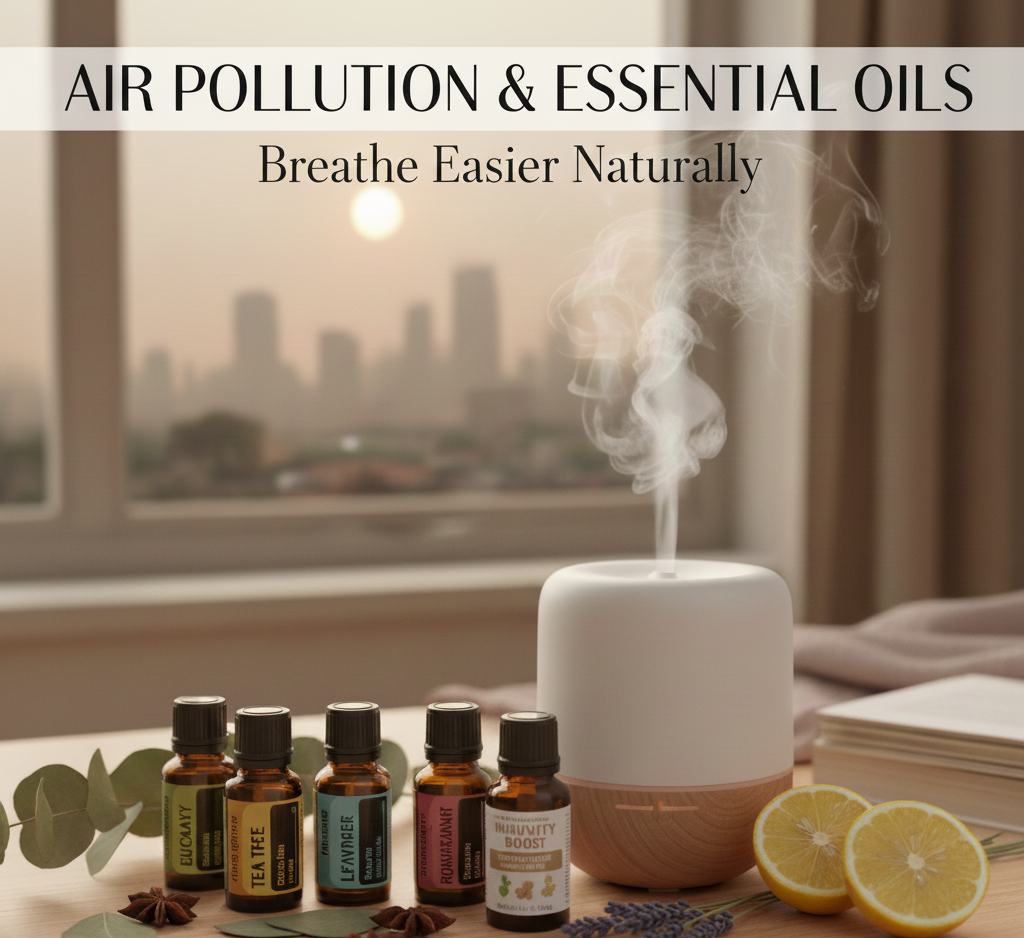
Air pollution has become a daily reality for many people around the world, bringing smog, fine dust, and harmful gases into the air we breathe. Constant exposure can affect our lungs, skin, immunity, energy levels, and even mood. While essential oils cannot replace medical treatment, air purifiers, or masks, they can be a natural support system to create a fresher indoor environment, ease breathing discomfort, and help the mind relax during high-pollution days.
What Air Pollution Does To Your Body?
Air pollution is a complex mix of particulate matter (PM2.5 and PM10), industrial emissions, smoke, vehicle exhaust, and other toxins. These tiny particles and gases can enter deep into the lungs and even reach the bloodstream. Over time, this exposure may contribute to:
– Cough, sore throat, and nasal congestion
– Irritated or watery eyes and dull, tired-looking skin
– Fatigue, headaches, poor sleep, and low mood
Experts usually recommend limiting outdoor exposure on high-pollution days, ventilating indoor spaces wisely, using masks when necessary, and adopting a healthy lifestyle to support overall immunity. Along with these measures, essential oils can be used as a complementary wellness tool to improve the feeling of indoor air and support respiratory comfort.
How Essential Oils Can Help During Pollution Season
Essential oils are concentrated plant extracts known for their aromatic and wellness-supporting properties. Many of them have antimicrobial, anti-inflammatory, antioxidant, or calming actions, which can be helpful when air quality is poor. When used properly, they may:
– Support a fresher-feeling indoor environment
– Help ease congestion or stuffy breathing
– Promote relaxation and better sleep
– Support the body’s natural defenses
It is important to remember that essential oils are supportive, not a cure. People with asthma, chronic lung conditions, serious illnesses, or those who are pregnant should always check with a doctor before using essential oils, especially by inhalation.
Best Essential Oils For Polluted Air
In this section, you can interlink each oil name to the specific product page on your e‑commerce site.
1. Eucalyptus Essential Oil – For Easier Breathing
Eucalyptus essential oil is widely used in respiratory blends for its fresh, camphorous aroma. Many people find that it helps open up the airways and supports easier breathing when they feel congested. It is often included in inhalation products and chest rubs designed for cold, cough, and pollution-related discomfort.
2. Tea Tree Essential Oil – Natural Air-Cleansing Support
Tea tree essential oil is known for its strong antimicrobial properties. It is commonly used in natural cleaning products and diffusers to help reduce unwanted microbes and refresh indoor spaces. When diffused in moderation, it can contribute to a cleaner, fresher atmosphere at home or in the office.
3. Lavender Essential Oil – Stress Relief And Sleep Support
Air pollution doesn’t just affect the body; it also increases stress and worry about health. Lavender essential oil is famous for its calming, soothing aroma that can ease stress and support better sleep. Aromatherapy studies often highlight lavender for relaxation, making it ideal for night-time diffusion when pollution anxiety is high.
4. Lemon Essential Oil – Fresh And Uplifting Aroma
Lemon essential oil has a bright, citrus scent that instantly refreshes any room. It is commonly used in natural air-freshening and cleaning blends because it helps neutralize unwanted odours and brings a “clean” feel to indoor spaces. When combined with other oils like tea tree or eucalyptus, it can create a powerful air-refreshing blend.
5. Peppermint Essential Oil – Cooling Comfort For Stuffy Days
Peppermint essential oil contains menthol, which gives a cooling effect and helps many people feel relief from stuffy nose or heavy head. It is often used in inhalation blends for sinus and respiratory comfort. A small amount, properly diluted, can be helpful for those days when pollution makes the air feel heavy and uncomfortable.
6. Frankincense Essential Oil – Deep Breathing And Emotional Balance
Frankincense essential oil is traditionally used in meditation and deep breathing practices. Its warm, resinous aroma encourages slow, mindful breathing and can help create a sense of emotional stability. Many people use frankincense in blends for both respiratory support and spiritual or emotional grounding.
7. Rosemary Essential Oil – Focus And Mental Clarity
When the air is polluted, people often complain of brain fog and low concentration. Rosemary essential oil has an energising, herbal aroma that is often associated with better alertness, focus, and mental clarity. It is useful for daytime diffusion near your work or study desk.
8. Immune-Supportive Oils – Oregano, Thyme, And Ginger
Long-term exposure to pollution can put extra load on the immune system. Essential oils like oregano, thyme, and ginger are rich in compounds often used in immune-support blends. They are usually added in small amounts to diffuser blends or massage oils (well diluted) to support overall wellness.
How To Use Essential Oils Safely During High Pollution
1. Diffusion For Fresher Indoor Air
– Add 4–8 drops of essential oil (or a blend) to a water-based diffuser.
– Run it for 20–30 minutes in a closed room and then switch off.
– Good blends:
– Eucalyptus + Tea Tree + Lemon for fresher air.
– Lavender + Frankincense for calm sleep.
– Peppermint + Rosemary for energy and focus.
2. Steam Inhalation (For Adults Only, With Care)
– Take a bowl of hot water and add just 1–2 drops of eucalyptus or peppermint essential oil.
– Keep your face at a safe distance, cover your head with a towel, and inhale the steam for a few minutes with eyes closed.
– Avoid this method for children, asthmatics, and anyone sensitive to strong aromas.
3. Diluted Massage Blends
– Mix 3–4 drops of essential oil in 1 tablespoon of carrier oil like coconut, jojoba, or sweet almond.
– Gently massage on chest, back, or the soles of the feet before bedtime.
– A soothing blend could be eucalyptus + frankincense + lavender (in small amounts) for relaxation and breathing comfort.
4. DIY Room And Linen Sprays
– In a spray bottle, add distilled water and a solubilizer (if available) along with a blend of lemon, tea tree, and lavender.
– Shake well and spray lightly on curtains, door mats, or linens to keep your space feeling fresh.
Safety Precautions (Very Important For Your Brand Trust)
Always add a clear safety note in your blog and on product pages:
– Do not apply essential oils undiluted on the skin; always mix with a carrier oil.
– Do a patch test before regular use to check for any irritation.
– Pregnant women, children, elderly people, and those with asthma or serious health conditions should consult a doctor before using essential oils, especially by inhalation.
– Do not ingest essential oils unless guided by a qualified professional.
– Avoid continuous, all-day diffusion; use in short intervals in well-ventilated spaces.
– Keep all essential oils away from eyes and out of reach of children and pets.
Conclusion
Air pollution may be a global challenge, but small lifestyle changes can make your home a safer and more comfortable space. Along with masks, filters, and healthy habits, high-quality essential oils offer a natural way to freshen indoor air, support easier breathing, and calm the stress that often comes with living in polluted environments. By choosing and combining oils such as eucalyptus, tea tree, lavender, lemon, peppermint, frankincense, rosemary, and immune-supportive oils like oregano, thyme, and ginger and using them safely you can transform your home into a soothing sanctuary and help your family breathe a little easier every day.