
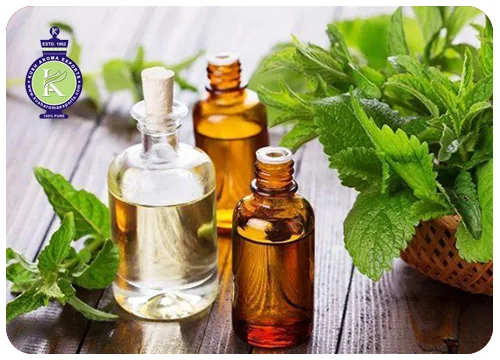
Patchouli Essential Oil: Benefits, Uses and Blending Guide
The oil that gets better with age, and how to tell a real one from a cut one.
Most essential oils are at their best the day they are bottled. Patchouli is different. It deepens, softens and improves for years.
That is one reason patchouli essential oil holds such a place in perfumery. It is also one of the most adulterated oils on the market, so knowing what you are buying matters.
This guide covers what patchouli is, what it does, how to blend it, the difference between dark and light grades, and how to spot a cut oil.
What Is Patchouli Essential Oil?
Patchouli oil comes from the leaves of Pogostemon cablin, a bushy herb in the mint family. The leaves are harvested, dried, often lightly fermented, and then steam distilled. You can read about the process on our page on how we distil essential oils.
Indonesia is the main producer, followed by China. Smaller amounts come from India, Malaysia and Brazil. Sumatran oil is widely regarded as the benchmark for depth of aroma.
The scent is rich, earthy and slightly sweet, with a dry, woody base. People either love it or need time to. Either way, it is unmistakable.
What Is in It
Patchouli is unusual because it is made almost entirely of heavy molecules called sesquiterpenes. The key markers are patchoulol (also called patchouli alcohol), alpha-bulnesene and alpha-guaiene.
That chemistry explains two things. First, the oil evaporates very slowly, which is why it works as a fixative. Second, it resists oxidation, which is why it keeps for years. Our post on do essential oils expire explains that in detail.
Patchouli Essential Oil Benefits and Uses
Patchouli earns its place in four main areas. Here is what each one looks like in practice.
1. Perfumery and Fixative Use
This is patchouli’s home ground. Because it evaporates so slowly, it anchors lighter notes and keeps a blend smelling the same for hours. A single drop in a citrus blend can double how long the scent lasts.
It sits at the base of countless classic perfumes, usually alongside sandalwood, vetiver, rose or bergamot.
2. Grounding and Calming
In aromatherapy, patchouli is used for a settled, grounded feeling. It suits meditation, an evening wind-down, or a stressful afternoon.
Diffuse two or three drops, or blend it into a 2 percent roll-on with lavender or bergamot. Keep amounts small, because it dominates quickly.
3. Skin Care
Patchouli has a long history of use for dry, cracked or tired-looking skin. Modern research shows moderate antioxidant activity in the oil, which supports that traditional use.
Add it at 1 percent to a facial oil with jojoba or rosehip. For the body, 2 percent in sweet almond works well. As always, patch test first, and see our essential oil dilution guide for ratios.
4. Soap, Candles and Home Fragrance
Because it holds its scent through the heat of soap making and the burn of a candle, patchouli is a favourite in both crafts. It is also one of the best-performing oils for cold and hot scent throw.
Our posts on best essential oils for soap making and best essential oils for candle making both lean on patchouli as a base note.
Dark vs Light Patchouli Essential Oil
You will see both on offer, and the difference is real. It comes down to the still.
| Dark patchouli | Light patchouli | |
|---|---|---|
| Colour | Deep amber to brown | Pale yellow to light amber |
| Why | Traditionally distilled in iron vessels, which react with the oil | Distilled in stainless steel |
| Aroma | Deeper, smokier, more rustic | Cleaner, brighter, more refined |
| Best for | Perfumery bases, soap, incense | Skin care, light perfumes, clear products |
| Note | Iron traces can discolour pale products | Preferred where colour matters |
Neither is better. Perfumers often keep both. Choose dark when you want depth and do not mind colour. Choose light when the product must stay pale, or when the blend is delicate. You can compare our dark patchouli oil and wild-crafted patchouli oil grades, or the certified organic patchouli oil for certified organic supply.
What Patchouli Essential Oil Blends Well With
Patchouli is a base note, so it pairs with almost anything lighter. These combinations are the most reliable.
| Partner | Effect | Suggested ratio (patchouli : partner) |
|---|---|---|
| Sandalwood | Deep, warm, meditative | 1 : 1 |
| Ylang ylang | Rich, floral, sensual | 1 : 2 |
| Bergamot | Bright top over an earthy base | 1 : 3 |
| Lavender | Calm and grounded | 1 : 3 |
| Rose | Classic perfumery pairing | 1 : 2 |
| Vetiver | Very earthy, long lasting | 1 : 1 |
| Geranium | Green, rosy, balanced | 1 : 2 |
| Sweet orange | Warm and cheerful | 1 : 4 |
Start with less patchouli than you think you need. It grows in a blend over the first day as the top notes settle. For seasonal ideas, see our spring essential oil blends post.
Patchouli Essential Oil Improves With Age
Here is something buyers rarely hear. Fresh patchouli can smell sharp and green. Given a year or two in a sealed, dark bottle, it turns rounder and sweeter.
The Tisserand Institute guidance puts sesquiterpene-rich oils such as patchouli, sandalwood and vetiver at a 4 to 8 year shelf life when stored well. The aroma may improve, though the therapeutic quality can still slowly change. So for skin use, aim to use it within the earlier part of that window.
How to Spot Adulterated Patchouli Essential Oil
Patchouli is expensive to produce and cheap to fake. That makes it a target. Here is what to look for.
The Gurjun Balsam Problem
The most common adulterant is gurjun balsam oil, a resin oil from the Dipterocarpus tree. It is cheaper, it is similar in weight, and it blends in without an obvious change in smell.
The good news is that it shows up on a GC/MS report. Gurjun balsam contains alpha-gurjunene, which does not belong in patchouli. If that compound appears, the oil has been cut.
We sell gurjun balsam as its own oil, for its own uses. It should never appear inside a bottle labelled patchouli.
Other Common Adulterants
- Copaiba balsam and cedarwood oils
- Camphor distillate residues
- Synthetic fixatives such as hercolyn D
- Diluents: benzyl benzoate, propylene glycol, vegetable oils
- Cheaper Chinese oil blended into premium Sumatran oil
The only reliable check is a batch-specific GC/MS report. Ask for it, match the batch number to the bottle, and look at the patchoulol level. Our guide on how to tell if an essential oil is therapeutic grade walks through reading that document, and our GC-MS testing page explains how the test works and where its limits lie.
Safety Notes for Patchouli Essential Oil
Patchouli has a good safety record. The Tisserand Institute safety data lists it as a low-risk allergen with no dermal use restriction. Large patch-test studies found reactions in well under one percent of people.
Two cautions do apply:
- Blood thinners. Patchouli shows antiplatelet activity, linked to its alpha-bulnesene content. If you take anticoagulant medication, or have surgery coming up, speak to your doctor first. Our post on essential oils for heart palpitations covers this area.
- Phototoxicity. Results are mixed, so keep freshly applied patchouli off skin that will see strong sun.
As with any oil, dilute before skin use, and keep it away from pets.
Patchouli Essential Oil FAQs
What is patchouli essential oil good for?
Patchouli is used as a perfume fixative, for a grounding and calming aroma, in skin care for dry or tired skin, and in soap and candles where its scent survives heat well. Its slow evaporation is what makes it so useful as a base note.
What does patchouli smell like?
Rich, earthy and slightly sweet, with a dry, woody base. Dark patchouli is smokier and deeper. Light patchouli is cleaner and brighter. Aged patchouli is rounder and sweeter than fresh oil.
What is the difference between dark and light patchouli?
Dark patchouli is traditionally distilled in iron vessels, which react with the oil and give it a deep amber colour and a smokier aroma. Light patchouli is distilled in stainless steel, so it stays pale and smells cleaner. Choose light when your product must stay pale.
Does patchouli oil expire?
Very slowly. Its sesquiterpene chemistry resists oxidation, so it keeps for 4 to 8 years when stored in dark glass away from heat. In fact, the aroma often improves over the first couple of years.
How can I tell if patchouli oil is real?
Request a batch-specific GC/MS report and match the batch number to the bottle. Real patchouli is high in patchoulol. If alpha-gurjunene appears, the oil has been cut with gurjun balsam. A very low price for a rare oil is also a warning sign.
What does patchouli blend well with?
Sandalwood, ylang ylang, bergamot, lavender, rose, vetiver, geranium and sweet orange all pair well. As a base note, patchouli sits under almost anything lighter. Start with less than you think, because it grows in a blend over the first day.
The Bottom Line
Patchouli essential oil is a base-note workhorse. It fixes perfumes, grounds a blend, supports dry skin, and holds its scent through soap and candle making. Above all, it keeps for years and often improves.
The only real risk is buying a cut oil. So ask for the GC/MS, look for patchoulol, and watch for gurjun balsam. For choosing oils by need more broadly, our essential oils and their uses guide is the place to start.
Three grades of patchouli, one standard of proof
Kush Aroma distils dark, wild-crafted and certified organic patchouli in Kannauj. Every batch is available with a GC/MS report so you can check the patchoulol level yourself.
About Kush Aroma Exports
Kush Aroma Exports has been distilling essential oils in Kannauj, Uttar Pradesh, India’s historic perfumery capital, since 1962. We steam distil, cold press and CO2-extract at our own ISO-certified facility, so we see these oils from raw plant material through to the finished batch. Our organic range carries independent organic certification.
That hands-on production experience is what informs this guide. Every oil we supply can come with a batch-specific Certificate of Analysis and a GC/MS report (read how GC-MS testing works), and our product pages publish typical constituent profiles with a clear note that batch values vary.
We write about what we can verify. Where the science is uncertain, we say so.
Sources and further reading
- Tisserand Institute — essential oil safety and shelf life — tisserandinstitute.org
- AromaWeb — Essential oil shelf life by chemical family — aromaweb.com
- NCCIH — Aromatherapy — nccih.nih.gov