What Dermatologists Want You to Know
Is Tea Tree Oil Good for Ingrown Hair? What Dermatologists Want You to Know
An ingrown hair shows up when a hair curls back and grows into the skin instead of out of it. It usually looks like a small red bump, and it can be itchy, sore, or even a little inflamed.
Most people get them after shaving, waxing, or tweezing, especially on the face, legs, underarms, or bikini area.
So, is tea tree oil good for ingrown hair? Yes, tea tree oil is one of the most well-studied natural options for this. It has antibacterial and anti-inflammatory properties that can calm irritated skin and help prevent infection.
In this guide, we will explain how it works, how to use it safely, and which other natural oils pair well with it.
What Is Tea Tree Oil?
Tea tree oil comes from the leaves of the Melaleuca alternifolia plant, native to Australia. It has been used for generations for its cleansing and healing properties.
According to Healthline, research has shown that tea tree oil has antimicrobial, antibacterial, antifungal, and anti-inflammatory properties. It may also help speed up wound healing.
If you want a closer look at where this oil comes from and how it is extracted, our guide on tea tree essential oil uses and benefits covers this in more depth.
Does Tea Tree Oil Help Ingrown Hairs? Three Ways It Works
Tea tree oil supports ingrown hair care in three main ways: prevention, healing, and protection from infection.
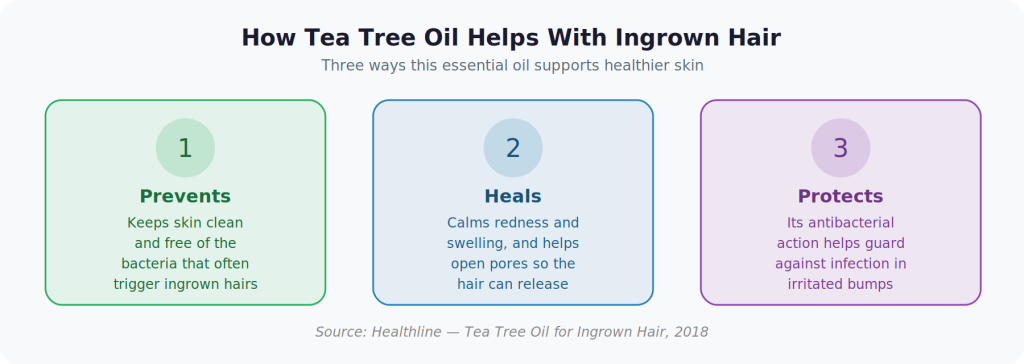
Infographic 1: Three Ways Tea Tree Oil Helps With Ingrown Hair
1. It Helps Prevent Ingrown Hairs
Keeping skin clean and free of bacteria reduces the chance of a hair becoming trapped under the surface. A light tea tree oil blend, applied after shaving, can help.
2. It Helps Heal Existing Bumps
Tea tree oil may calm redness and swelling. It can also help open clogged pores, which makes it easier for the trapped hair to work its way out naturally.
3. It Helps Protect Against Infection
Ingrown hairs that are picked at or irritated can become infected. The antibacterial action in tea tree oil may help lower that risk when used correctly.
How to Use Tea Tree Oil for Ingrown Hair at Home
You do not need a complicated routine. A simple, consistent approach works best.
- Never apply tea tree oil directly to skin, always dilute it first
- Mix 8 to 10 drops of tea tree oil with 1 ounce of a carrier oil, like coconut oil or shea butter
- Apply a warm compress first to open the pores and loosen the trapped hair
- Dab the diluted oil gently onto the bump, twice a day – morning and night
- Follow up with a light moisturizer to keep the skin hydrated
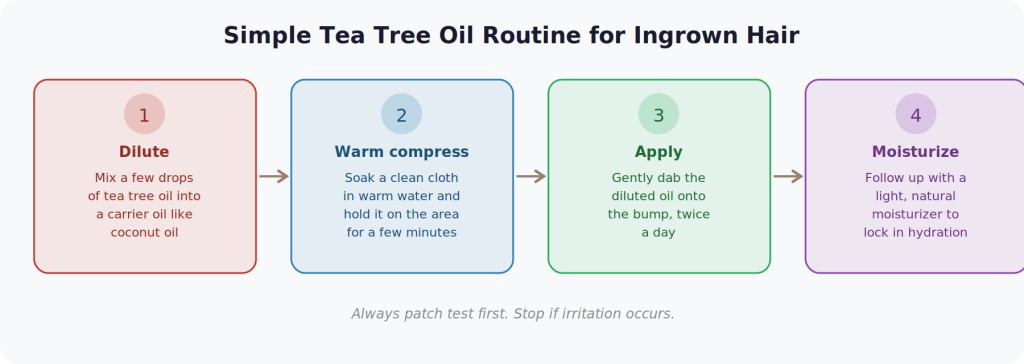
Infographic 2: A Simple 4-Step Tea Tree Oil Routine for Ingrown Hair
Why a Warm Compress Helps
A warm compress for ingrown hair is one of the simplest home remedies available. The heat helps open up the pore, softens the skin, and makes it easier for the hair to surface on its own, especially when paired with tea tree oil afterward.
Tea Tree Oil vs Coconut Oil for Ingrown Hair
A common question is whether coconut oil helps ingrown hairs just as well as tea tree oil. The honest answer is that they do different jobs, and many people use both together.
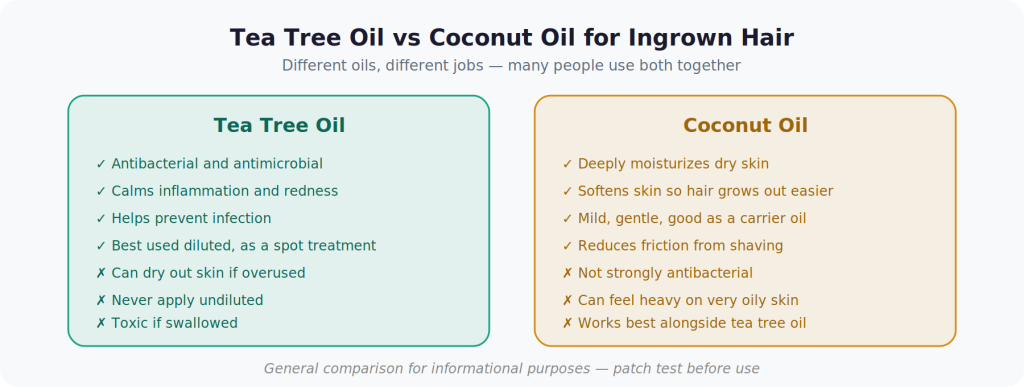
Infographic 3: Tea Tree Oil vs Coconut Oil — Quick Comparison
Coconut oil is an excellent carrier oil. It deeply moisturizes and softens the skin, which makes it easier for ingrown hairs to release. You can browse our Coconut Virgin Carrier Oil if you want a pure, cold-pressed option to mix with tea tree oil at home.
Tea tree oil, on the other hand, brings the antibacterial and anti-inflammatory power that coconut oil does not have on its own. Used together, they complement each other well.
Other Essential Oils Good for Ingrown Hairs
Tea tree oil is not the only option. A few other natural oils are also worth knowing about:
- German chamomile oil — known for its skin-soothing and moisturizing qualities
- Lemongrass oil — valued for antibacterial and skin-rejuvenating properties
- Lavender oil — often used in natural shaving creams to help discourage ingrown hairs
If you want to explore pure, therapeutic-grade options, take a look at our Therapeutic Grade Essential Oils range, or browse our full Natural Essential Oils collection for other skin-friendly oils.
Precautions to Keep in Mind
Tea tree oil is generally safe for topical use, but a few precautions matter.
- Never swallow tea tree oil, it is toxic if ingested
- Always dilute it before applying to skin to avoid irritation
- Do a patch test on a small area first, especially if you have sensitive skin
- Stop use and speak with a dermatologist if irritation or infection develops
| If your ingrown hair does not improve, becomes very painful, or shows signs of infection like pus or spreading redness, it is best to speak with a dermatologist rather than relying on home treatment alone. |
Frequently Asked Questions
Is tea tree oil good for ingrown hair cysts?
Tea tree oil may help with mild inflammation around an ingrown hair, but a true cyst (a firmer, deeper lump) often needs medical attention. If a bump feels hard, grows larger, or does not resolve in a week or two, see a dermatologist.
How do you remove an ingrown hair safely at home?
Avoid picking or squeezing it. Instead, apply a warm compress to soften the skin, then gently exfoliate, and follow with diluted tea tree oil to reduce inflammation. Let the hair release on its own rather than forcing it out.
Does coconut oil help ingrown hairs?
Coconut oil moisturizes and softens skin, which can make it easier for a trapped hair to surface. It does not have the same antibacterial strength as tea tree oil, so the two are often used together.
What is the best essential oil for ingrown hair bumps?
Tea tree oil is the most studied option for ingrown hair bumps because of its antibacterial and anti-inflammatory properties. Lavender and lemongrass oil are also commonly used as natural alternatives.
Can I use tea tree oil on razor bumps every day?
Yes, when properly diluted in a carrier oil, tea tree oil can be applied once or twice daily. Avoid daily use if you notice dryness or irritation, and give your skin a break if needed.
The Bottom Line
Is tea tree oil good for ingrown hair? For most people, yes. It is a simple, natural option that supports prevention, healing, and protection from infection- three things that matter most when dealing with ingrown hairs.
The key is using it correctly: always diluted, applied consistently, and paired with gentle skin care like warm compresses and a good carrier oil.
| Looking for pure, high-quality tea tree oil to try this routine at home? Explore our Organic Tea Tree Essential Oil collection, sourced and processed with care. |