
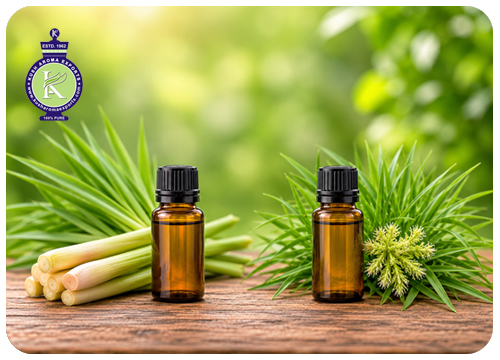
Lemongrass oil and citronella oil look alike, smell alike and come from related grasses. Many shops even sell them as if they were the same. They are not, and picking the wrong one can mean a weaker mosquito spray, a scent that doesn’t suit your soap, or a skin reaction you didn’t expect.
In this guide, we compare lemongrass oil vs citronella oil by plant, scent, main compounds, uses and safety. You will also learn which one is better for your purpose and how to buy 100% pure essential oils from a trusted source like Kusharoma Exports.
Lemongrass Oil vs Citronella Oil at a Glance
| Feature | Lemongrass oil | Citronella oil |
| Botanical names | Cymbopogon flexuosus, Cymbopogon citratus | Cymbopogon nardus (Ceylon), Cymbopogon winterianus (Java) |
| Main compounds | Citral | Citronellal, geraniol, citronellol |
| Scent | Strong, sharp, fresh lemon | Softer, grassy, citrusy, slightly sweet |
| Best known for | Uplifting aroma, soaps, skincare, cleaning | Mosquito-repelling products |
| Popular in | Diffusers, soaps, cosmetics, room sprays | Candles, outdoor sprays, repellents |
| Skin caution | Can irritate; always dilute | Can irritate; always dilute |
What Is Lemongrass Oil?
Lemongrass oil is steam-distilled from the leaves of lemongrass. Its main compound is citral, which gives it a bright, lemony smell. It is widely used in soaps, body care, cleaning products and diffusers. Read more about this oil in our guide to lemongrass essential oil benefits.
What Is Citronella Oil?
Citronella oil comes from a different member of the same grass family. The two main types are Ceylon (Sri Lanka) and Java. Its main compounds are citronellal, geraniol and citronellol, which are known for deterring insects. Both types are sold by Kusharoma Exports: citronella essential oil Ceylon and citronella essential oil Java.
Healthline also points out that lemongrass and citronella have similar scientific names, so labels can be confusing. That is why checking the Latin name matters.
Key Differences Between Lemongrass and Citronella Oil
1. Scent
Lemongrass smells like fresh lemon and is stronger and sharper. Citronella is softer, with a grassy, slightly sweet citrus note. If you want a clearly lemony fragrance for soap or a room spray, choose lemongrass. If you want a gentler, outdoorsy scent, choose citronella.
2. Chemistry
The two oils get their character from different compounds. Citral dominates lemongrass. Citronellal, geraniol and citronellol dominate citronella. That is why they behave differently, even though both are citrusy. A GC/MS report shows these percentages for each batch.
3. Mosquito-repelling power
This is the biggest difference. Citronella is the best-known natural mosquito-repelling oil and is common in candles, sprays and outdoor products. In one study that compared many oils, citronella protected for around two hours. Lemongrass also repels insects, but citronella has the stronger reputation. Neither lasts as long as chemical repellents, so reapply often.
4. Everyday uses
Lemongrass is more common in aromatherapy, skincare, hair care and cleaning. Citronella is more common in outdoor candles, repellent sprays and pest-control products. Both can be used in soaps and candles, and our guide to making a lavender mint candle at home shows how scented candles are built.
5. Skin safety
Both oils are strong and can irritate skin if used undiluted. Lemongrass is high in citral, which can cause skin sensitivity in some people. Citronella can also cause reactions, and reported sensitization differs between types. Always dilute and patch test.
Which Is Better: Lemongrass or Citronella?
Neither is better for everything. It depends on your goal.
- For mosquito-repelling candles and sprays: Choose citronella. It is the better-known and more established choice.
- For a fresh lemon scent in soap, room sprays and cleaning: Choose lemongrass.
- For a diffuser blend: Lemongrass gives a brighter lift. Citronella gives a milder outdoor feel.
- For a general outdoor spray: Blend both. Many makers combine them for scent and repelling action.
- For cosmetics and body care: Use lemongrass in small, diluted amounts and check IFRA limits for your product.
How to Use Lemongrass and Citronella Oil Safely
Never apply either oil undiluted. Use a carrier oil such as coconut, jojoba or sweet almond.
- Skin and body sprays: Start at 0.5–1% dilution (about 3–6 drops per 30 ml) and patch test for 24 hours. Our dilution guide has charts.
- Diffuser: Use 3–5 drops, with good ventilation and breaks.
- Do not swallow either oil.
- Pets and children: Keep both away from babies, children and pets. Cats are especially sensitive to essential oils.
- Pregnancy and medical conditions: Ask a doctor before use.
See the essential oil safety guide for the full list of rules.
How to Buy Pure Lemongrass and Citronella Oil
Both oils are often adulterated or mixed up, so check before you buy:
- Latin name: Lemongrass should say Cymbopogon flexuosus or citratus. Citronella should say nardus or winterianus.
- GC/MS report: Look for the right main compounds for each oil.
- Origin: Ceylon and Java citronella are different types, so the label should say which one.
- Price: Very cheap oils are a warning sign.
- Packaging: Dark glass bottles protect the oil.
Our guide to spotting fake essential oils covers the red flags in detail.
How to Choose Essential Oils Manufacturers and Suppliers
If you make soaps, candles, repellent sprays or home-care products, the supplier matters as much as the oil. Good essential oils manufacturers and suppliers work directly with the distillers, so they can trace each batch back to its source. Resellers often cannot.
When you compare essential oils wholesale suppliers, ask for the following:
- A recent GC/MS report for each batch
- The Latin name, origin and type (for example, Ceylon or Java citronella)
- A sample before you place a bulk order
- Clear minimum order quantities and packaging details
This matters even more in India, which produces a large share of the world’s lemongrass and citronella. Quality varies a lot, so choose essential oil wholesale suppliers in India who share documents without being asked. The best natural essential oils suppliers also tell you how the oil was distilled and stored. Our distillation page explains what to ask.
Buy Lemongrass and Citronella Oil from Kusharoma Exports
Kusharoma Exports is a manufacturer and exporter based in Kannauj, India’s traditional perfumery hub. As a natural essential oils manufacturer and supplier, we offer 100% pure lemongrass essential oil and both types of citronella oil: Ceylon and Java. You can also choose organic citronella oil and browse our full range of natural essential oils.
If you are looking for 100% pure essential oils manufacturers for a private-label range, we back every batch with GC/MS testing and clear sourcing details. A reliable natural essential oils manufacturer should offer this, and we share the same reports we recommend you ask for. As essential oil wholesale suppliers in India, we supply bulk quantities to soap makers, candle makers, cosmetic brands and spas, as well as small trial orders. Buyers in the capital region can also visit our Delhi page.
Conclusion
Lemongrass oil is sharper and lemony, and it suits soaps, cleaning and aromatherapy. Citronella oil is softer and better known for repelling mosquitoes. Choose by purpose, dilute well and buy from a supplier who shares GC/MS reports. To order 100% pure lemongrass or citronella oil in retail or bulk, contact Kusharoma Exports, your trusted natural essential oils manufacturer and supplier.
No Comments