
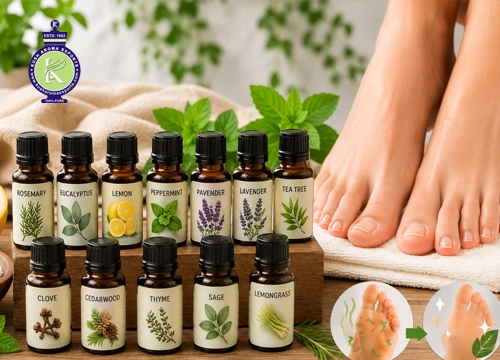
Smelly feet are more common than most people admit. Foot odour affects people of all ages and lifestyles and it can be genuinely frustrating to deal with. If you have tried commercial sprays and powders without lasting results, essential oils for foot odor offer a powerful natural alternative.
Essential oils work on the root cause of smelly feet, not just the surface smell. They kill the odour-causing bacteria that thrive in warm, damp environments and they do so without harsh chemicals or synthetic fragrances.
This guide covers the 11 best essential oils for foot odor, DIY foot soaks, shoe sprays, and natural remedies that deliver real results in 2026.
What Causes Foot Odor? Understanding the Root Problem
Before exploring the best treatment for smelly feet, it helps to understand what causes the problem in the first place.
Feet have more sweat glands per square centimetre than almost any other part of the body. Sweat itself is odorless. The smell comes from bacteria, specifically Brevibacterium linens and Staphylococcus epidermidis, that break down sweat on the skin’s surface.
Common triggers of foot odour include:
- Wearing enclosed shoes for long periods
- Synthetic socks that trap moisture
- Poor foot hygiene or infrequent washing
- Fungal infections (such as athlete’s foot)
- Hormonal changes (teens, pregnancy, menopause)
- Certain medical conditions (hyperhidrosis, diabetes)
A peer-reviewed study published on PubMed (National Library of Medicine, NIH) specifically investigated antimicrobial essential oil combinations to combat foot odour and found several essential oils to be highly effective at inhibiting the key odour-causing bacteria.
Essential oils address the problem at its source- killing bacteria, absorbing moisture, and leaving feet smelling genuinely clean.
11 Best Essential Oils for Foot Odor
1. Tea Tree Essential Oil — The Ultimate Foot Odor Fighter
Tea tree oil for stinky feet is the most researched and recommended natural remedy for foot odour. Its active compound terpinen-4-ol has broad-spectrum antimicrobial action , it kills the bacteria and fungi responsible for both foot odor and athlete’s foot.
Why it works:
- Destroys odour-causing bacteria on contact
- Treats fungal infections that worsen foot smell
- Controls excess moisture on the foot’s surface
- Prevents reinfection when used consistently
How to use: Add 5 drops to a warm foot soak with Epsom salt. Alternatively, mix 3 drops in 1 teaspoon of carrier oil and massage into clean, dry feet before bed.
Tea tree oil for foot odor is one of the most effective single-oil solutions available and it remains the gold standard in natural foot odour cure routines.
2. Peppermint Essential Oil — Cool, Fresh, and Antibacterial
Peppermint oil provides an instant freshness that goes beyond masking, it actively kills bacteria while leaving a long-lasting cool sensation on the skin.
Why it works:
- High menthol content kills surface bacteria
- Provides a genuine cooling and refreshing effect
- Reduces foot perspiration with its mild astringent properties
- Leaves a clean, pleasant scent without synthetic fragrance
How to use: Mix 4 drops in a warm foot soak. Or add 3 drops to 1 tablespoon of carrier oil for a post-shower foot massage. It also works beautifully in DIY shoe sprays.
3. Lavender Essential Oil — Gentle and Consistently Effective
Lavender essential oil is one of the most versatile essential oils good for foot odor. It combines antibacterial action with a calming, pleasant fragrance that neutralises odour without overpowering it.
Why it works:
- Kills Staphylococcus bacteria naturally
- Soothes dry, cracked skin on heels and toes
- Has antifungal properties that address underlying infections
- Leaves a subtle, clean, lasting fragrance
How to use: Add 5 drops to a warm foot soak. Mix 3 drops with carrier oil for a nightly foot massage. Blend with tea tree oil for a powerful antibacterial combination.
4. Eucalyptus Essential Oil — Deep Cleansing and Deodorising
Eucalyptus oil is a powerful antimicrobial agent containing 1,8-cineole. It is one of the best essential oils for foot odor in shoes because of its strong deodorising and antibacterial properties.
Why it works:
- Penetrates deeply into skin to kill bacteria
- Has significant antifungal activity
- Neutralises strong foot odours effectively
- Works well as a shoe spray ingredient
How to use: Add 5 drops to a warm foot soak. Alternatively, mix 3 drops with water in a spray bottle and spritz inside shoes after wearing.
5. Lemongrass Essential Oil — Citrusy, Antimicrobial, and Astringent
Lemongrass oil contains citral — a potent antibacterial and antifungal compound that addresses both foot odour and the conditions that cause it.
Why it works:
- Kills odour-causing bacteria efficiently
- Acts as a natural astringent to reduce sweating
- Provides a fresh, citrus scent that neutralises odour
- Has proven antifungal properties relevant to athlete’s foot
How to use: Add 4 drops to a foot soak with warm water and Epsom salt. Mix with eucalyptus oil for a powerful dual-action foot soak.
6. Thyme Essential Oil — The Most Potent Antibacterial Option
Thyme essential oil (particularly thymol chemotype) is one of the most powerful antibacterial essential oils available. Research consistently shows it inhibits a wide range of foot odour bacteria.
Why it works:
- Thymol is one of the strongest natural antibacterial compounds known
- Targets both bacteria and fungi simultaneously
- Highly effective even in small concentrations
- Works well in foot soaks and shoe deodorisers
How to use: Use at a lower dilution than most oils, add 2–3 drops to a full foot soak or mix 1 drop in 1 teaspoon of carrier oil. Thyme is strong and should be used with care.
7. Clove Essential Oil — Powerful and Long-Lasting
Clove essential oil contains eugenol, which has exceptional antimicrobial properties. It is one of the most effective essential oils for foot odor when a strong, lasting treatment is needed.
Why it works:
- Eugenol destroys foot odour bacteria very effectively
- Provides long-lasting antimicrobial protection
- Also targets nail fungus when applied to affected nails
- Works well blended with lemon or lavender to balance its intense scent
How to use: Add 2–3 drops to a foot soak (use sparingly — it is very potent). Blend with carrier oil before applying to skin.
8. Cedarwood Essential Oil — Woody, Deodorising, and Shoe-Friendly
Cedarwood oil is one of the most underrated oils for foot odour management. Its woody, earthy scent actively neutralises bad odours and it is particularly effective in shoes.
Why it works:
- Absorbs and neutralises odour rather than masking it
- Has antimicrobial properties that reduce bacterial load
- Excellent for use in shoe sachets and insole sprays
- Pairs beautifully with peppermint and lavender for a fresh-clean scent
How to use: Add 4–5 drops to a cotton ball and place inside shoes overnight. Or blend into a DIY shoe powder with baking soda.
9. Frankincense Essential Oil — Healing and Deodorising
Frankincense oil is not the first oil people think of for smelly feet — but it offers a unique combination of antibacterial action, skin healing, and odour neutralisation that makes it genuinely valuable in this context.
Why it works:
- Reduces bacterial growth on skin
- Promotes healing of cracked heels and dry skin that harbour bacteria
- Has a warm, grounding scent that works well in foot blends
- Supports skin cell renewal on callused or thickened areas
How to use: Mix 3 drops with 1 tablespoon of coconut or jojoba oil. Massage into feet and heels after bathing. Cover with socks overnight.
10. Lemon Essential Oil — Citrus Freshness and Antibacterial Power
Lemon essential oil contains d-limonene — a compound with proven antibacterial and deodorising properties. It is one of the most effective essential oil foot odor options for those who want a fresh, clean scent.
Why it works:
- Kills odour-causing bacteria naturally
- Provides a long-lasting, genuinely clean fragrance
- Acts as an astringent to reduce foot perspiration
- Brightens and cleanses skin when used in foot soaks
How to use: Add 4 drops to a warm foot soak. Use only at night — lemon oil is photosensitive. Always wash feet before going outdoors after application.
11. Rosemary Essential Oil — Antifungal and Deodorising
Rosemary oil completes this list as a strong antifungal and antibacterial agent. It is especially useful when foot odour is linked to fungal infection.
Why it works:
- Fights fungal infections that contribute to odour
- Stimulates circulation, keeping feet healthier
- Has a fresh, herbaceous scent that combats odour effectively
- Works well in foot soaks and massage blends
How to use: Add 4 drops to a foot soak, or mix 3 drops in carrier oil for a nightly massage.
DIY Foot Soaks for Odor: 3 Proven Recipes
Recipe 1: Tea Tree and Epsom Salt Foot Soak
Epsom salt for foot odor is one of the most effective remedies available. Magnesium sulphate in Epsom salt draws out toxins, softens skin, and creates an inhospitable environment for bacteria.
Ingredients:
- 1 litre warm water
- ½ cup Epsom salt
- 5 drops tea tree essential oil
- 3 drops lavender essential oil
Method: Dissolve Epsom salt in warm water. Add essential oils. Soak feet for 15–20 minutes. Dry thoroughly — especially between toes.
Epsom salt for smelly feet used this way, 3–4 times per week, produces visible results within two weeks.
Recipe 2: Apple Cider Vinegar Foot Soak
Apple cider vinegar for foot odor is a time-tested remedy. Its acetic acid lowers the skin’s pH, making it hostile to bacteria and fungi.
Ingredients:
- 1 litre warm water
- ½ cup apple cider vinegar
- 4 drops peppermint essential oil
- 3 drops eucalyptus essential oil
Method: Mix all ingredients in a basin. Soak feet for 15 minutes. Rinse with clean water. Dry thoroughly.
Apple cider vinegar for smelly feet works particularly well for chronic foot odour linked to bacterial overgrowth. Use 3–4 times per week.
Note: Do not use apple cider vinegar on cracked or broken skin — it will sting and can cause irritation.
Recipe 3: Lemongrass and Thyme Antibacterial Soak
This is the most potent antibacterial soak in the list — ideal for persistent or severe foot odour cure needs.
Ingredients:
- 1 litre warm water
- ¼ cup sea salt
- 3 drops lemongrass essential oil
- 2 drops thyme essential oil
- 3 drops lemon essential oil
Method: Combine in a warm water basin. Soak for 15 minutes. Rinse and dry feet completely.
DIY Shoe Odor Eliminator Spray
Shoes are often the main source of persistent foot odour. This spray tackles the problem directly.
Ingredients:
- 100 ml distilled water
- 1 tablespoon witch hazel
- 8 drops tea tree essential oil
- 5 drops eucalyptus essential oil
- 5 drops cedarwood essential oil
Method:
- Combine all ingredients in a dark glass spray bottle.
- Shake well before each use.
- Spray inside each shoe after wearing.
- Allow to dry fully before wearing again.
This is one of the most effective essential oils for foot odor in shoes solutions — and it replaces chemical shoe deodorisers entirely.
Natural Remedies Comparison Table
| Remedy | How It Works | Best For |
|---|---|---|
| Tea tree oil foot soak | Kills bacteria and fungi | Daily odour prevention |
| Epsom salt soak | Draws toxins, softens skin | Weekly deep cleanse |
| Apple cider vinegar soak | Lowers skin pH, kills bacteria | Chronic bacterial odour |
| Peppermint oil spray | Cools and deodorises | Quick freshness |
| Cedarwood in shoes | Absorbs and neutralises odour | Shoe odour prevention |
| Lemongrass + thyme soak | Maximum antibacterial action | Persistent/severe odour |
Daily Routine for Fresh, Odour-Free Feet
Consistency matters more than any single treatment. Here is a simple daily routine that produces lasting results:
Morning:
- Wash feet with antibacterial soap. Pay attention to between your toes.
- Dry completely — especially between toes. Moisture is the enemy.
- Apply 2–3 drops of diluted peppermint or tea tree oil blend to your feet.
- Wear breathable, moisture-wicking socks.
Evening:
- Remove shoes and allow feet to air out.
- Wash feet again if they have been in enclosed shoes all day.
- Apply the nightly foot massage blend (frankincense + lavender in carrier oil).
- Wear clean cotton socks overnight if applying treatment oils.
Weekly:
- Use a foot soak (Epsom salt or apple cider vinegar with essential oils) for 15–20 minutes.
- Gently exfoliate with a pumice stone to remove dead skin where bacteria thrive.
- Spray shoes with the DIY deodoriser.
- Rotate between shoe pairs to allow full drying.
You can also explore how essential oil quality affects results in our guide How to Know if an Essential Oil is Pure — because pure oils always outperform diluted or adulterated ones.
Safety Tips for Using Essential Oils on Feet
- Always dilute — Mix essential oils in a carrier oil or foot soak before skin contact
- Patch test — Test on a small area of the inner ankle. Wait 24 hours
- Avoid broken skin — Do not apply essential oils to open wounds, cracks, or blisters
- Thyme and clove — These are strong oils. Use at lower concentrations (1% or less)
- Lemon oil — Photosensitive. Use only at night or wash thoroughly before sun exposure
- Children — Use at half the recommended concentration for children over 6
- Diabetes — People with diabetes should consult a doctor before using foot soaks or topical remedies
Frequently Asked Questions (FAQs)
1. What are the best essential oils for foot odor?
Tea tree oil is the most effective single essential oil for foot odour. It kills odour-causing bacteria and fungi simultaneously. Peppermint, lavender, eucalyptus, and lemongrass are equally strong options. For maximum results, blend tea tree and lavender in an Epsom salt foot soak three to four times per week.
2. Does apple cider vinegar really help with smelly feet?
Yes. Apple cider vinegar for stinky feet works by lowering the skin’s pH level, making the environment hostile to bacteria and fungi. Soak feet in a solution of half-cup apple cider vinegar per litre of warm water for 15 minutes, three to four times per week. Combine with tea tree or peppermint oil for enhanced results.
3. How does Epsom salt help with foot odor?
Epsom salt draws out toxins through the skin, softens hardened skin where bacteria accumulate, and creates an alkaline environment that slows bacterial growth. Adding essential oils such as tea tree or lavender to an Epsom salt foot soak makes it significantly more effective as a foot soak for odor remedy.
4. How do I use essential oils in my shoes to prevent odor?
Mix 8 drops of tea tree oil, 5 drops of eucalyptus, and 5 drops of cedarwood in 100 ml of distilled water with a tablespoon of witch hazel. Pour into a spray bottle and spritz inside shoes after each wear. Allow to dry fully before wearing again. Alternatively, place cotton balls with a few drops of cedarwood oil inside shoes overnight.
5. How long does it take for essential oils to eliminate foot odor?
With consistent daily use, foot soaks 3–4 times per week, daily oil application, and shoe deodorising most people notice a significant improvement within 2 to 3 weeks. Chronic or severe foot odour linked to fungal infection may take 4–6 weeks of consistent treatment to fully resolve.
Final Thoughts: Natural Foot Odor Relief That Actually Works
Essential oils for foot odor are one of the most effective natural solutions available, when used consistently and correctly. Tea tree, peppermint, lavender, eucalyptus, and lemongrass each target the root cause of smelly feet: bacteria and fungi that thrive in warm, moist environments.
Combine essential oils with Epsom salt or apple cider vinegar foot soaks, use a DIY shoe spray, and follow a simple daily foot hygiene routine. Most people see genuine, lasting results within 2–3 weeks.